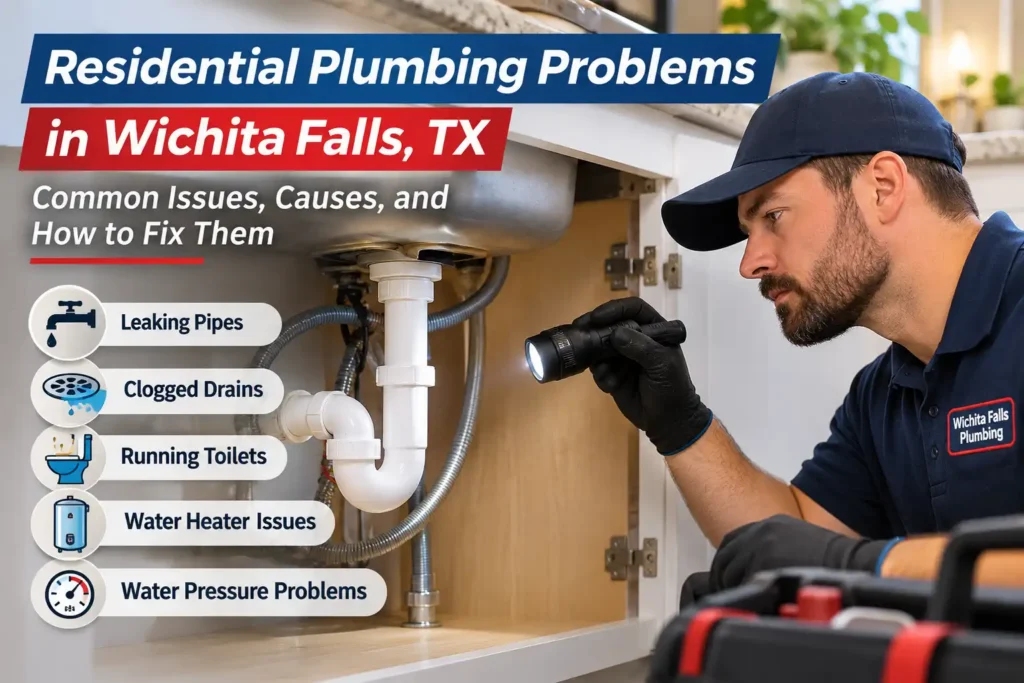
Plumbing problems are a fact of life for homeowners. Pipes age, drains collect debris, fixtures wear out, and the Texas weather adds its own stress. The trouble is that a small drip or a slightly slow drain rarely feels urgent, and that is exactly how a cheap fix turns into a costly repair involving water damage, mold, or a failed water heater.
Quick answer: The most common residential plumbing problems are leaking pipes, clogged drains, running toilets, low water pressure, water heater failures, sewer line blockages, and hidden leaks. Catching them early helps you limit water damage and avoid larger repairs.
This guide walks through ten common plumbing problems in Wichita Falls homes, the symptoms homeowners tend to ignore, what causes trouble in the first place, a maintenance checklist, what you can safely fix yourself, and when to call a professional.
10 Common Plumbing Problems in Wichita Falls Homes
Everyday plumbing systems develop problems through normal wear, blockages, poor maintenance, and changing environmental conditions. Here are the ten we see most often, and how to recognize each one.
1. Leaking Pipes and Hidden Water Leaks
Leaks usually start at loose connections, worn seals, or pipes weakened by corrosion and age. The visible ones are easy to spot. The hidden ones, behind walls or under floors, do the most damage because nobody notices until the damage is advanced.
Watch for damp cabinets under sinks, water stains on ceilings or walls, musty smells, warped flooring, and a water bill that climbs without any change in how you use water. The U.S. EPA’s WaterSense program reports that household leaks can waste roughly 180 gallons of water per week for an average family.
Wichita Falls uses digital water meters, including ¾-inch and 1-inch Sensus iPerl models. These meters help homeowners monitor water consumption and identify possible leaks.
Call a professional when the meter keeps moving but you cannot find the source, when you see stains with no obvious cause, or when the leak is inside a wall or beneath the slab.
2. Clogged Kitchen and Bathroom Drains
Bathroom drains typically clog from hair and soap residue. Kitchen drains clog from grease, food waste, and soap scum that cools and hardens inside the pipe. The warning signs are slow drainage, standing water, gurgling sounds, and clogs that keep returning.
Recurring clogs often indicate buildup inside the pipes or a blockage deeper in the drainage system. Removing visible debris may provide temporary relief without addressing the underlying problem.
Repeated use of chemical drain cleaners also requires caution. Products differ in their ingredients and compatibility. Follow the manufacturer’s instructions and never mix different drain cleaners. Some acidic cleaners containing sulfuric or hydrochloric acid can damage plumbing materials when used incorrectly.
3. Running Toilets and Leaking Toilet Components
A toilet that runs after flushing is usually caused by a worn flapper, a faulty fill valve, or an incorrectly adjusted float. A tank that slowly leaks into the bowl can waste a surprising amount of water and may show up first as a higher water bill.
The flapper is one of the most common causes. When it fails to seal properly, water escapes from the tank into the bowl. The fill valve then continues adding water to maintain the tank level.
According to the U.S. Environmental Protection Agency (EPA), even a small toilet flapper leak can waste approximately 30 gallons of water per day, or 900 gallons per month.
When internal components are corroded, cracked, or keep failing after replacement, it is time to have a plumber replace the assembly or the toilet.
4. Low Water Pressure Throughout the House
Common causes include mineral buildup in faucet aerators, partially closed shut-off valves, leaking supply pipes, and pressure regulator problems. The first question to ask is whether the problem affects one fixture or the whole house. One fixture usually points to a clogged aerator or a local valve. Every fixture suggests a supply-side or regulator issue.
A sudden pressure drop can happen when a shut-off valve is partly closed. It may also indicate a supply-line leak or a failing pressure regulator.
If pressure stays low across the house, have a plumber inspect the supply system.
5. High Water Pressure and Plumbing Stress
High water pressure is an overlooked problem because the house seems to be working well. Strong pressure feels nice, but excessive pressure stresses pipe joints and fixtures, and it can lead to leaking faucets and damaged appliance hoses.
Yes. Excessive water pressure can put unnecessary stress on plumbing fixtures, pipe connections, appliance hoses, and water heaters. Over time, this may contribute to leaks and premature component failure.
A pressure-reducing valve (PRV) regulates incoming pressure, and a professional pressure test shows where your system actually sits. Pressure should not be adjusted without understanding the system, since the wrong setting can create new problems.
6. Water Heater Problems and Lack of Hot Water
Common causes include faulty heating elements or thermostats, sediment buildup, damaged anode rods in applicable tank water heaters, and leaking connections. Strange noises (popping, rumbling), inconsistent hot water, and moisture around the base of the tank are all warning signs.
Not enough hot water, water that fluctuates in temperature, noises from the tank, rusty water, and leaks around the unit. Routine inspection and maintenance extend the life of the heater. Follow the manufacturer’s guidance for flushing and servicing.
Gas and electrical repairs and replacements should be done by a licensed professional.
7. Sewer Line Blockages and Backups
Sewer line problems are more serious than ordinary drain clogs. Causes include tree root intrusion, grease and foreign objects, cracked or damaged pipes, and aging underground plumbing.
Multiple drains backing up at the same time, gurgling fixtures, and sewage odors are strong indicators. A single slow drain more often points to a local clog. A sewer camera inspection lets a plumber see the condition of the line without guessing.
8. Frozen and Burst Pipes During Winter
Pipes freeze when they are exposed to cold, especially in garages, exterior walls, crawl spaces, and other unheated areas. When water freezes, it expands, and that pressure can split a pipe. NOAA’s 1991 to 2020 climate normals for Wichita Falls show an average January low around 30°F and a December low near 31.8°F, so freeze preparation is a genuinely local concern.
Insulate exposed pipes, disconnect and drain outdoor hoses, seal drafts near plumbing, and let faucets drip during hard freezes.
9. Garbage Disposal Problems
Disposals jam or clog from food waste accumulation, grease, and fibrous materials like celery or potato peels. Warning signs include humming without spinning, unusual noises, and persistent odors.
Grease and fibrous or starchy food waste are the usual culprits, along with running too little water during and after use. Things that should never go into a disposal include grease, coffee grounds in quantity, bones, pasta and rice in large amounts, fibrous vegetables, and non-food items.
10. Dripping Faucets and Worn Plumbing Fixtures
Dripping usually comes from worn washers, cartridges, or seals, though loose connections and mineral deposits can also cause it. A faucet drip is small but constant, and it adds up to a lot of wasted water over time.
The internal part that stops the flow (washer, cartridge, or seal) is worn or damaged. The same wear shows up in showerheads and handles that become difficult to operate. If the fixture is old, corroded, or repairs keep failing, replacement often makes more sense than another repair.
If the fixture is old, corroded, or repairs keep failing, replacement often makes more sense than another repair.
Plumbing Problems Homeowners Often Ignore
Some problems do not look like emergencies, so they get ignored. These are the symptoms worth catching early.
Slightly Slow Drains
Gradual changes are easy to get used to. A drain that is a little slow today is often a partial blockage that gets worse. Recurring slow drains can point to deeper buildup or a line problem.
Gurgling Toilets and Drains
Gurgling can signal a drainage restriction or a venting problem. If it happens repeatedly, or when other fixtures are used, have a professional investigate.
Deteriorating Water Heater Anode Rods
The sacrificial anode rod corrodes in place of the tank steel. When it is used up, the tank itself can begin to corrode. Inspection matters for applicable tank water heaters.
Difficult-to-Operate Shut-Off Valves
If a valve is stiff, stuck, or leaking, you may not be able to stop water in an emergency. Know where your valves are and test them periodically.
What Causes Plumbing Problems in Residential Homes?
The problems above trace back to a handful of causes.
Aging Pipes and Plumbing Materials
Older plumbing systems can develop leaks, corrosion, and restricted water flow. The material matters because each pipe type ages differently. Wichita Falls homes may contain several plumbing materials, depending on their construction date and renovation history.
Improper Disposal of Household Waste
Grease, food scraps, hair, and hygiene products can clog drains and sewer lines. Some products are marketed as “flushable,” but that label does not mean they break down like toilet paper.
Seasonal Temperature Changes
Winter freezes can affect exposed pipes, and temperature swings stress materials.
Tree Root Intrusion and Underground Pipe Damage
Roots can enter small cracks or joints in sewer pipes and grow into blockages.
Plumbing Maintenance Checklist for Wichita Falls Homeowners
| Maintenance task | Recommended action |
| Exposed pipes | Inspect for moisture, corrosion, and damage |
| Kitchen sinks | Check for leaks and slow drainage |
| Bathroom drains | Remove visible hair and debris |
| Toilets | Check for continuous running |
| Faucets | Inspect for dripping and loose handles |
| Water heater | Follow manufacturer maintenance guidance |
| Shut-off valves | Check accessibility and condition |
| Water pressure | Investigate unusual pressure changes |
| Outdoor plumbing | Inspect exposed pipes before freezing weather |
| Sewer system | Investigate recurring backups and odors |
Monthly Plumbing Checks
- Look under sinks for moisture, stains, or musty smells.
- Run each drain and watch for slow draining or gurgling.
- Listen for toilets that run after flushing.
- Check faucets and showerheads for drips.
- Check the base of the water heater for moisture.
- Compare your water bill to the previous month.
Seasonal Plumbing Maintenance
Before winter, disconnect outdoor hoses, insulate exposed pipes, check outdoor spigots, and know where your main shut-off is. In spring, look for damage from winter.
When to Schedule a Professional Plumbing Inspection
Schedule an inspection when symptoms recur, you see visible damage or stains, your water bill spikes, or you are buying or selling a home.
Which Plumbing Problems Can Homeowners Fix Themselves?
Basic maintenance is within most homeowners’ reach. Repairs involving hidden pipes, gas, electricity, or sewer lines call for a licensed professional.
| Problem | Basic homeowner action |
| Slow sink drain | Remove visible debris |
| Running toilet | Inspect accessible tank components |
| Dripping faucet | Check whether the fixture needs repair |
| Clogged aerator | Clean the removable aerator |
| Frozen pipe | Shut off water if necessary and seek safe professional guidance |
When Should You Call an Emergency Plumber in Wichita Falls?
Call promptly for:
- Burst pipes and uncontrolled water leaks.
- Sewage backing up into the home.
- Major water heater leaks.
- Sudden loss of water throughout the house.
- Water near electrical equipment.
- Severe leaks that cannot be isolated safely.
If it is safe to do so, shut off the water supply at the main valve. If water is near outlets, appliances, or the electrical panel, stay away and do not touch anything electrical. If you can do so safely, turn off power at the breaker from a dry location, or call your utility or emergency services.
How to Choose a Reliable Plumber in Wichita Falls, TX
Before hiring a plumber, verify their Texas license through the Texas State Board of Plumbing Examiners. Check the license status and confirm the Responsible Master Plumber’s details. Request a written estimate that explains labor, materials, repair costs, and possible additional charges. Read customer reviews to assess technician professionalism, response times, communication, pricing, and workmanship. Ask about warranty coverage for parts and labor before approving repairs. Finally, confirm that the company provides the service you need, such as leak detection, drain cleaning, water heater repairs, sewer services, or fixture replacement.
Get Professional Plumbing Help in Wichita Falls
Plumbing problems can become more expensive when repairs are delayed. Whether you’re dealing with a leaking pipe, clogged drain, water heater issue, or sewer backup, identifying the cause early can help prevent further damage. Visit Wichita Falls Plumbing for residential plumbing information and local assistance. You can also contact the business at (940) 280-0037 to discuss your plumbing needs.
Frequently Asked Questions About Residential Plumbing Problems
What are the most common plumbing problems in Wichita Falls homes?
Common problems include leaking pipes, clogged drains, running toilets, low water pressure, water heater issues, sewer blockages, frozen pipes, and dripping faucets.
How do I know if I have a hidden water leak?
Look for unexplained increases in water bills, damp walls, musty odors, water stains, or warped flooring. You can also check your water meter when all fixtures are turned off.
Why does my water pressure suddenly drop?
Common causes include clogged faucet aerators, partially closed shut-off valves, leaking pipes, or a faulty pressure regulator.
Can high water pressure damage my plumbing?
Yes. Excessive pressure can strain pipes, joints, fixtures, and appliance hoses. A plumber can test your home’s water pressure and recommend adjustments.
Why does my water heater make popping or rumbling noises?
Sediment buildup inside the tank can cause popping or rumbling sounds as water heats beneath the deposits. Flushing and maintenance may help prevent further buildup.
When should I call an emergency plumber?
Call an emergency plumber for burst pipes, sewage backups, major leaks, sudden water loss, or leaks near electrical equipment. Turn off the main water supply when safe to do so.

Leave a Reply